Plant guide
Jade Plant
Crassula ovata
Jade plant has published toxicity warnings for cats, although some veterinary references give different household-safety guidance. We do not recommend it as a cat-safe purchase. Prevent your cat from chewing it and choose a plant with a reviewed non-toxic assessment for an accessible display.
What this guide covers: This page concerns Crassula ovata. Money plant and money tree are ambiguous names and do not identify this species by themselves.
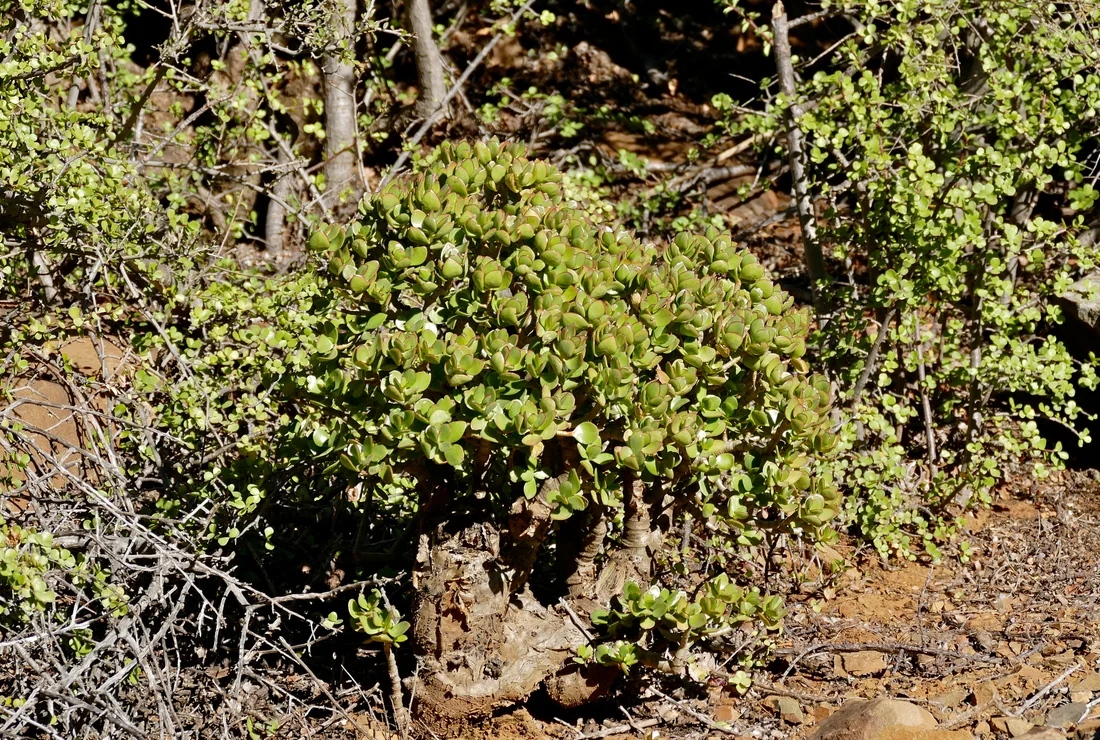
Photo:
Photo details
2016-10-03 Crassula ovata, Camdeboo NP, Eastern Cape (31803933474).jpg
By Bernard DUPONT from FRANCE

License: CC BY-SA 2.0
Resized for display. Full photograph retained; no background or botanical edits.
This displayed image is shared under the same CC BY-SA 2.0 license.
Plant shopping
Explore this plant
Photo:
Photo details
2016-10-03 Crassula ovata, Camdeboo NP, Eastern Cape (31803933474).jpg
By Bernard DUPONT from FRANCE
License: CC BY-SA 2.0
Resized for display. Full photograph retained; no background or botanical edits.
This displayed image is shared under the same CC BY-SA 2.0 license.
Jade plant
View on Amazon — jade plant; paid link; opens in a new tabPaid link · Opens in a new tab
Cat safety is unresolved. This purchase link is not a cat-safe recommendation. Prevent your cat from accessing this plant.
Read the evidence in this guide ↓Explore non-toxic plants →A little paw-note: We may earn a commission when you buy through these links. This helps us keep building and helps Nico & Larry sustain their lavish kitty lifestyle.
As an Amazon Associate I earn from qualifying purchases.
Look for Crassula ovata and check the selected variety. Listings and availability can change.
Plant identity
- Scientific name
- Crassula ovata
- Scope
- Species
- Family
- Crassulaceae
- Also known as
- Crassula argentea
Our practical recommendation
Your cat comes first.
Choose another plant for a display your cat can reach. Jade has published toxicity warnings, and we do not recommend it as a cat-safe purchase.
Explore reviewed non-toxic plants ↗Why the guidance differs
ASPCA identifies Crassula ovata as toxic in its succulent guidance. VPIS includes the same species on its household pet-safe list, which still cautions about digestive upset from plant material. These statements have different framing, but their disagreement has not been resolved. Pet Poison Helpline's broader Crassula entry describes digestive upset and less common lethargy or unsteadiness; we have not assigned an exact-species cat severity rating.
A disagreement between references does not cancel a toxicity warning. We keep those warnings visible while the assessment remains unresolved.
Sources & review
Explicit Crassula ovata warning.
Source scope and date
ASPCA · Source name: Crassula ovata. Names the exact species and warns of pet toxicity; does not establish a cat-specific severity grade.
Accessed .
Exact species; household suitability with general ingestion caveat.
Source scope and date
VPIS · Source name: Crassula ovata. Page 3, household pet-safe list; general warning that plant material can still cause digestive upset.
Accessed .
Literal source taxon Crassula sp.; contextual clinical guidance, not an exact-species cat study.
Source scope and date
Pet Poison Helpline · Source name: Crassula sp.. Literal genus-level entry. Reported pet effects are context, not an exact-species cat experiment.
Accessed .
The exact-species entry calls the plant non-poisonous; it is a general veterinary reference, not a cat-only assessment.
Source scope and date
Zurich · Source name: Crassula ovata. Veterinary toxic-plant reference, not a cat-only feeding study; no claim of proven ingestion safety.
Accessed .
Evidence checked . The cat-safety classification remains unresolved.
Find the right spot
How to grow this plant
Container growing guidance for Crassula ovata.
- Light
- Sunny position
Choose a sunny window, with protection from intense afternoon sun where needed.
- Watering
- Let the mix dry
Water once the mix dries, then drain the pot. Avoid leaving the plant extremely dry for prolonged periods, which can cause leaf drop.
- Temperature
- Daytime: 65–75°F / 18–24°C
Preferred daytime conditions are 65–75°F (18–24°C), with cooler nights around 50–55°F (10–13°C). These are preferred growing conditions, not survival limits. Protect from cold drafts.
- Humidity
- Typical indoor humidity
The relatively dry air found in many homes is suitable.
- Potting
- Use a very well-drained succulent mix. If repotting becomes necessary, do it as new growth starts.
- Through the year
- Reduce watering in autumn and winter.
Growing-guide sources
- crassula ovata - Extension Gardener Plant Toolbox ↗NC State Extension · Accessed 2026-11-01
Care guidance for the named taxon; indoor recommendations take precedence over outdoor hardiness information.
- Jade Plant ↗Clemson Cooperative Extension · Accessed 2026-11-01
Indoor growing guidance for the named taxon; outdoor hardiness is not used as an indoor growing range.
Growing advice reviewed 2026-11-01. Plant safety is assessed separately.
Safe alternatives
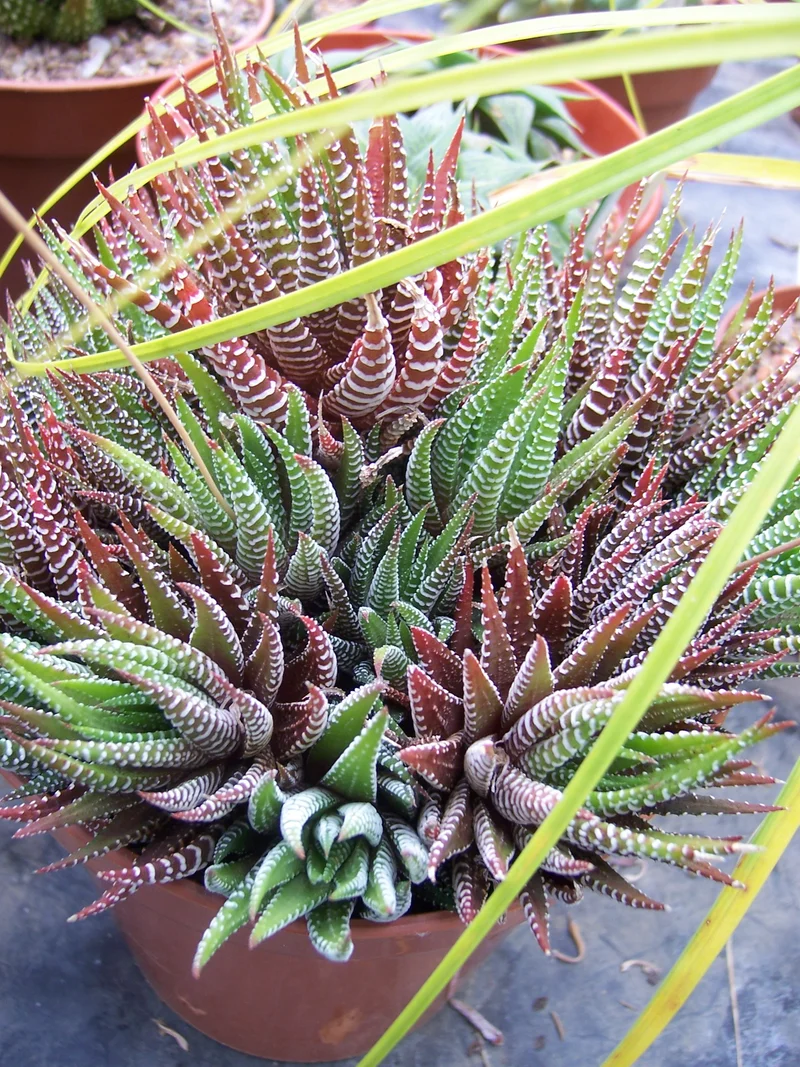
Photo:
Photo details
Winterbourne - Haworthia attenuata (6120983526).jpg
By stephen boisvert from Chicago, United States

License: CC BY 2.0
No botanical or background edits. Standard responsive framing and image format optimization only after acceptance.
Haworthia
Haworthiopsis attenuata
Bright indirect light
Growing range: 60–80°F
This guide covers Haworthiopsis attenuata, formerly named Haworthia attenuata. The safety evidence is a genus-level assessment applied to this documented member, not a cat-specific experiment on this species. It does not identify Haworthiopsis fasciata, unrelated zebra plants or unidentified hybrids.
For a small succulent display, consider Haworthiopsis attenuata. It forms a compact rosette rather than jade’s branching tree shape.