Plant guide
English yew
Taxus baccata
English yew is toxic to cats and can cause life-threatening heart problems. If your cat may have chewed yew, seek emergency veterinary advice immediately, even if your cat seems well.
What this guide covers: Taxus baccata only. Check the botanical name; a photograph alone cannot establish identity.
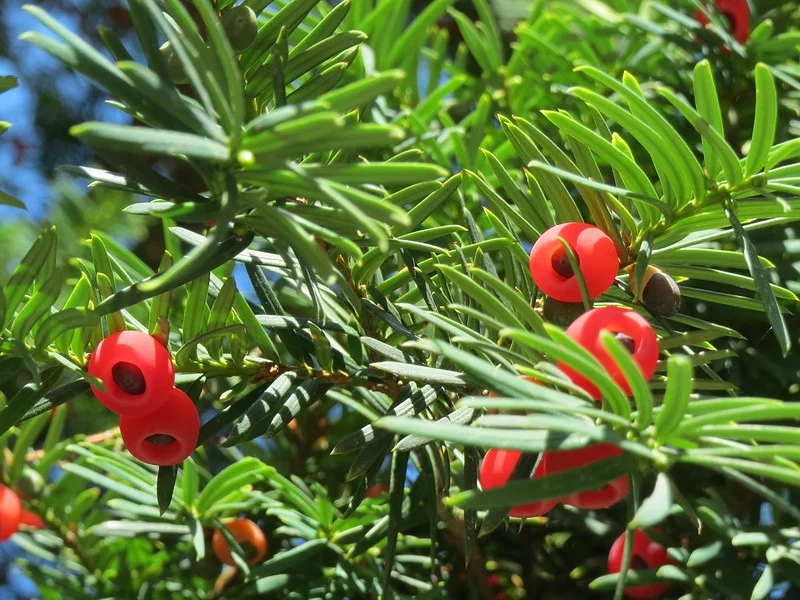
Photo:
Photo details
Taxus baccata — Taxus baccata female cones
By Andreas Rockstein
License: CC BY-SA 2.0
Resized and converted to WebP for display; botanical details unchanged.
This displayed image is shared under the same CC BY-SA 2.0 license.
Plant identity
- Scientific name
- Taxus baccata
- Scope
- Species
- Family
- Not recorded
- Also known as
- No reviewed aliases available
Find the right spot
How to grow this plant
Taxus baccata only. Check the botanical name; a photograph alone cannot establish identity.
- Light
- Sunny position or Some direct sun
Full sun to partial shade.
- Watering
Keep soil moist but never poorly drained or waterlogged.
- Temperature
- Temperature range not yet established
Shelter from cold winter winds and extreme conditions; no indoor range proposed.
- Humidity
No specific humidity target established.
- Potting
- Fertile, well-drained sandy or loamy soil.
- Through the year
- Prune only with safe disposal of clippings where pets cannot reach them. Existing-plant care is not a recommendation to plant yew around cats.
Growing-guide sources
- Taxus baccata ↗NC State Extension · Accessed 2026-10-16
Taxus baccata only. Check the botanical name; a photograph alone cannot establish identity.
Growing advice reviewed 2026-10-16. Plant safety is assessed separately.
Reviewed safety information
- Toxic principle
- Not recorded in the reviewed evidence
- Reported signs
- Not recorded in the reviewed evidence
- Severity
- Severity not established
Missing information is unknown. It should not be interpreted as an absence of risk.
Safe alternatives
No verified alternative recommendations are available for this guide.