Plant guide
Spider Plant
Chlorophytum comosum
Spider plant is often listed as non-toxic to cats, but published veterinary guidance is not fully consistent. Some references describe illness after cats chew it. We recommend preventing chewing and choosing a plant with a clearer reviewed assessment if your cat regularly eats houseplants.
What this guide covers: This page concerns Chlorophytum comosum. The name ribbon plant also refers to Dracaena sanderiana, which has a different safety assessment.
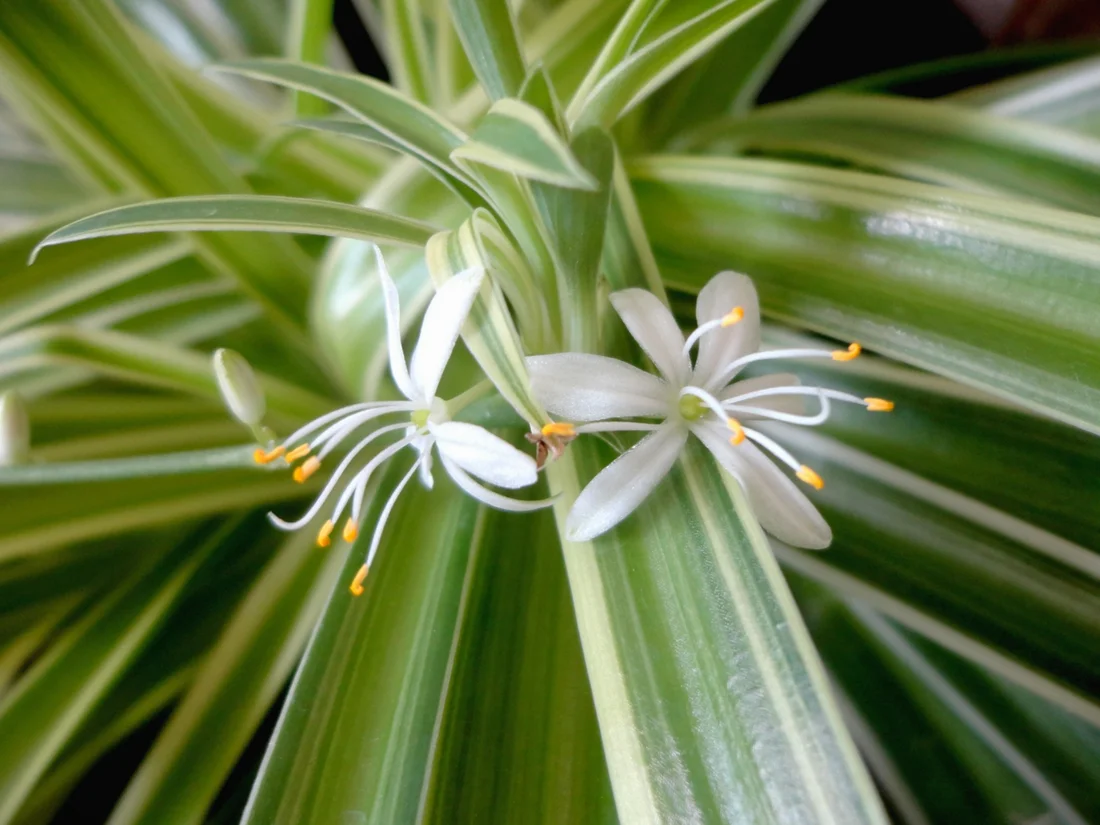
Photo:
Photo details
Malamadre (Chlorophytum comosum).jpg
By Juan Carlos Fonseca Mata

License: CC BY-SA 4.0
Resized for display. Full photograph retained; no background or botanical edits.
This displayed image is shared under the same CC BY-SA 4.0 license.
Plant shopping
Explore this plant
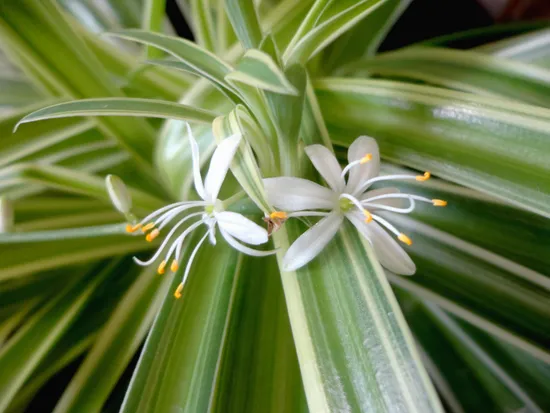
Photo:
Photo details
Malamadre (Chlorophytum comosum).jpg
By Juan Carlos Fonseca Mata
License: CC BY-SA 4.0
Resized for display. Full photograph retained; no background or botanical edits.
This displayed image is shared under the same CC BY-SA 4.0 license.
Spider plant
View on Amazon — spider plant; paid link; opens in a new tabPaid link · Opens in a new tab
Cat safety is unresolved. This purchase link is not a cat-safe recommendation. Prevent your cat from accessing this plant.
Read the evidence in this guide ↓Explore non-toxic plants →A little paw-note: We may earn a commission when you buy through these links. This helps us keep building and helps Nico & Larry sustain their lavish kitty lifestyle.
As an Amazon Associate I earn from qualifying purchases.
Look for Chlorophytum comosum and check the selected variety. Listings and availability can change.
Plant identity
- Scientific name
- Chlorophytum comosum
- Scope
- Species
- Family
- Asparagaceae
- Also known as
- Anthericum comosum, Spider Ivy
Our practical recommendation
Your cat comes first.
If your cat regularly chews houseplants, choose a plant with a clearer reviewed assessment. Prevent chewing while you check the evidence and the exact botanical name.
Explore reviewed non-toxic plants ↗Why the guidance differs
ASPCA and Pet Poison Helpline describe Chlorophytum comosum as non-toxic. Merck's broader Chlorophytum entry describes vomiting, drooling, retching and appetite loss in cats and refers to unidentified toxins. That group-level entry is not an exact-species study. The differences may involve terminology or evidence scope; we have not established a complete reconciliation.
A disagreement between references does not cancel a toxicity warning. We keep those warnings visible while the assessment remains unresolved.
Sources & review
Exact species; non-toxic listing.
Source scope and date
ASPCA · Source name: Chlorophytum comosum. Exact species and explicit cat non-toxicity listing.
Accessed .
Explicitly separates Chlorophytum comosum from Dracaena sanderiana.
Source scope and date
Pet Poison Helpline · Source name: Chlorophytum comosum. Separates this plant from Dracaena sanderiana; the shared common name is not a safety equivalence.
Accessed .
Chlorophytum spp.; cat ingestion effects, group evidence.
Source scope and date
Merck Veterinary Manual · Source name: Chlorophytum spp.. Genus-level clinical reference; not an exact-species experiment or a basis for a severity grade.
Accessed .
The 2019 article describes this species as mildly toxic to cats and dogs, unlike the plant database’s non-toxic entry. We have not confirmed a published correction.
Source scope and date
ASPCA · Source name: Chlorophytum comosum. Older article still accessible; its wording conflicts with the current plant listing. No documented retraction found.
Accessed .
Evidence checked . The cat-safety classification remains unresolved.
Find the right spot
How to grow this plant
Container growing guidance for Chlorophytum comosum.
- Light
- Medium indirect light or Bright indirect light
Offer medium to bright indirect light and protect from direct sun. Shade is tolerated.
Tolerates lower light; growth or flowering may be reduced. - Watering
- Let the mix partly dry
Let the mix dry slightly between thorough waterings, then drain. Brown tips can result from salts, water quality, low humidity or drying, so check the conditions rather than automatically adding more water.
- Temperature
- Temperature range not yet established
A normal indoor growing range has not been established in this review.
- Humidity
- Typical indoor humidity
Moderate indoor humidity suits this plant.
- Potting
- Use a well-drained potting mix.
- Through the year
- Reduce watering during slower winter growth. Root a plantlet while it is still attached, then separate it once roots form. Avoid excessive fertilizer, which can contribute to brown tips.
Growing-guide sources
- chlorophytum comosum - Extension Gardener Plant Toolbox ↗NC State Extension · Accessed 2026-11-01
Care guidance for the named taxon; indoor recommendations take precedence over outdoor hardiness information.
- Spider plant, Chlorophytum comosum ↗University of Wisconsin–Madison Extension · Accessed 2026-11-01
Indoor growing guidance for the named taxon; outdoor hardiness is not used as an indoor growing range.
Growing advice reviewed 2026-11-01. Plant safety is assessed separately.
Safe alternatives
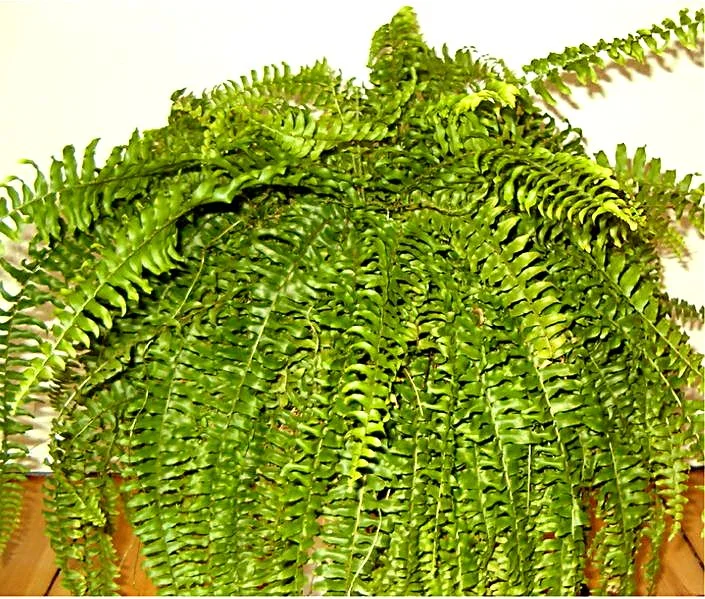
Photo:
Photo details
Nephrolepis exaltata indoor0705c.jpg
By BotBln

License: CC BY-SA 3.0
Resized and converted to WebP for display; botanical details unchanged.
This displayed image is shared under the same CC BY-SA 3.0 license.
Boston Fern
Nephrolepis exaltata
Bright indirect light
Growing range: 60–70°F
This guide covers Nephrolepis exaltata. Its source uses the common name Feather Palm but gives this exact fern species. It does not cover every plant sold as a fern.
For arching greenery in a hanging planter, consider Boston fern. It needs more consistent moisture and humidity than spider plant.