Plant guide
Polka Dot Plant
Hypoestes phyllostachya
Polka dot plant is considered non-toxic to cats, but eating it may cause mild vomiting or diarrhea. Enjoy it as a houseplant and discourage your cat from chewing it.
Non-toxic does not mean edible. Eating plant material can still upset your cat’s stomach.
What this guide covers: This guide covers Hypoestes phyllostachya only. A shared common name or similar appearance does not establish that another plant has the same assessment.
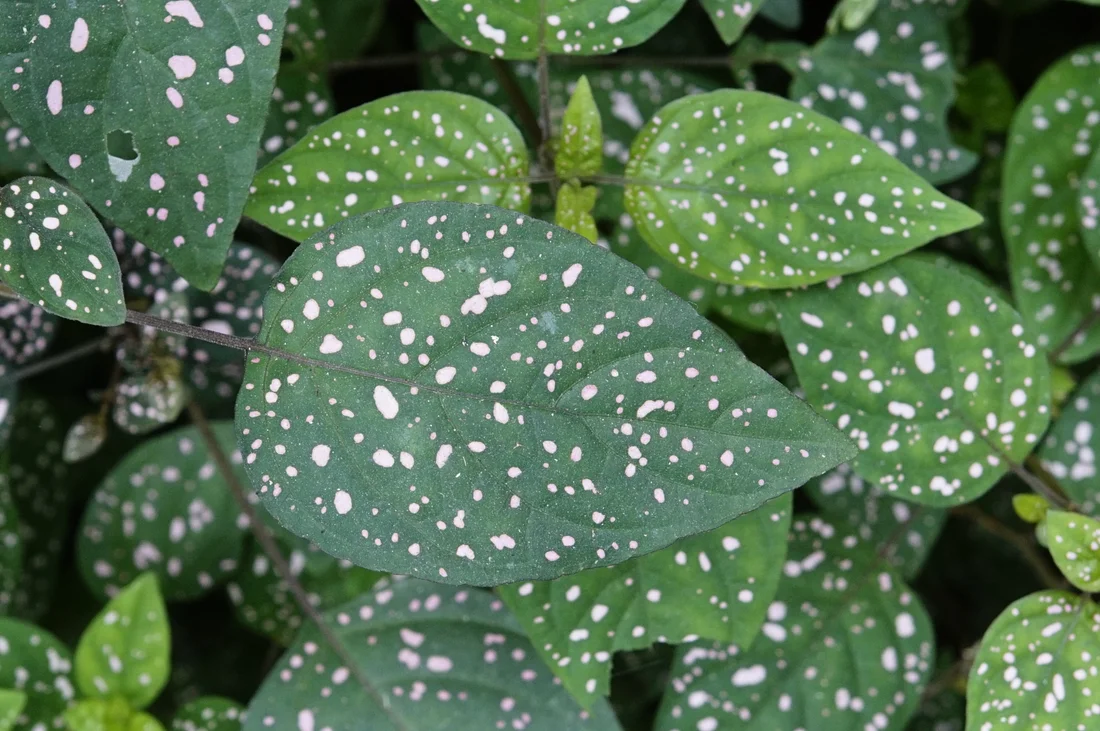
Photo:
Photo details
Hypoestes phyllostachya 0205.jpg
By Vengolis

License: CC BY-SA 4.0
Resized and converted to WebP for display; botanical details unchanged.
This displayed image is shared under the same CC BY-SA 4.0 license.
Plant identity
- Scientific name
- Hypoestes phyllostachya
- Scope
- Species
- Family
- Not recorded
- Also known as
- No reviewed aliases available
Find the right spot
How to grow this plant
Container growing guidance for Hypoestes phyllostachya.
- Light
- Bright indirect light
Choose bright, filtered light.
- Watering
- Let the mix partly dry
Water during active growth, allowing slight drying before the next watering.
- Temperature
- Temperature range not yet established
A normal indoor growing range has not been established in this review.
- Humidity
- Higher humidity
Prefers humid conditions.
- Potting
- Use a porous mix with organic matter.
- Through the year
- Pinch back long shoots regularly to maintain a compact plant.
Growing-guide sources
- hypoestes phyllostachya - Extension Gardener Plant Toolbox ↗NC State Extension · Accessed 2026-10-13
Care guidance for the named taxon; indoor recommendations take precedence over outdoor hardiness information.
- Polka Dot Plant, Hypoestes phyllostachya ↗University of Wisconsin-Madison Extension · Accessed 2026-10-13
The source covers the named plant and these growing conditions.
Growing advice reviewed 2026-10-14. Plant safety is assessed separately.
Reviewed safety information
- Toxic principle
- Not recorded in the reviewed evidence
- Reported signs
- Mild vomiting; Diarrhea
Missing information is unknown. It should not be interpreted as an absence of risk.
Safe alternatives
No verified alternative recommendations are available for this guide.