Plant guide
Red-edge peperomia
Peperomia clusiifolia
Red-edge peperomia is considered non-toxic to cats. This compact foliage plant fits a small indoor space. It is distinct from jade plants despite its thick leaves.
Non-toxic does not mean edible. Eating plant material can still upset your cat’s stomach.
What this guide covers: Peperomia clusiifolia only. Confirm the botanical label; a photograph cannot identify a visitor’s specimen.
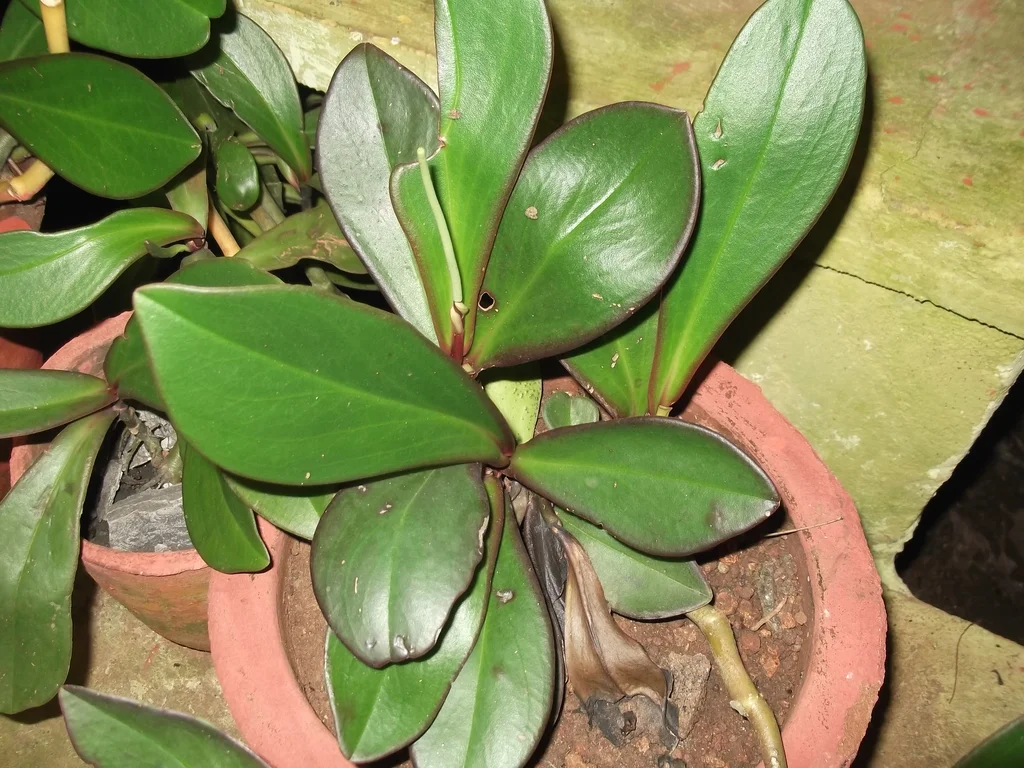
Photo:
Photo details
NC State Extension — Peperomia clusiifolia
By Yercaud-elango
License: CC BY-SA 4.0
Original photograph unchanged; proportionally resized for review and display.
This displayed image is shared under the same CC BY-SA 4.0 license.
Plant identity
- Scientific name
- Peperomia clusiifolia
- Scope
- Species
- Family
- Not recorded
- Also known as
- No reviewed aliases available
Find the right spot
How to grow this plant
Peperomia clusiifolia only; the light and water categories summarize the cited growing guidance.
- Light
- Bright indirect light
Bright, indirect light is preferred; lower light is tolerated.
Tolerates lower light; growth or flowering may be reduced. - Watering
- Keep evenly moist
Keep the mix moist without overwatering.
- Temperature
- Temperature range not yet established
Avoid cold drafts. A preferred numerical growing range was not established in the reviewed source.
- Potting
- Use a loamy potting mix with good drainage.
- Through the year
- Slow growth means frequent repotting is usually unnecessary.
Growing-guide sources
- Peperomia clusiifolia - Extension Gardener Plant Toolbox ↗NC State Extension · Accessed 2026-10-17
Exact named species; garden conditions are not relabeled as indoor requirements.
Growing advice reviewed 2026-10-17. Plant safety is assessed separately.
Reviewed safety information
- Toxic principle
- Not recorded in the reviewed evidence
- Reported signs
- Not recorded in the reviewed evidence
Missing information is unknown. It should not be interpreted as an absence of risk.
Safe alternatives
No verified alternative recommendations are available for this guide.
Sources & review
- Red-edge peperomia: plant safety reference ↗ASPCA Poison Control · Accessed
The ASPCA entry names the exact species and explicitly classifies it as non-toxic to cats. NC State supplies identity and growing guidance.
- Red-edge peperomia: supporting reference ↗Veterinary Poisons Information Service · Accessed 2026-10-17
- Red-edge peperomia: supporting reference ↗NC State Extension · Accessed 2026-10-17
Safety last reviewed .