Plant guide
Orchid (moth orchid)
Phalaenopsis spp.
Moth orchids in the Phalaenopsis genus are considered non-toxic to cats. Check for Phalaenopsis on the label when choosing one for your home.
Non-toxic does not mean edible. Eating plant material can still upset your cat’s stomach.
What this guide covers: Moth orchids identified as Phalaenopsis. This guide does not cover every orchid or hybrids involving other genera. A photograph alone cannot establish plant identity.
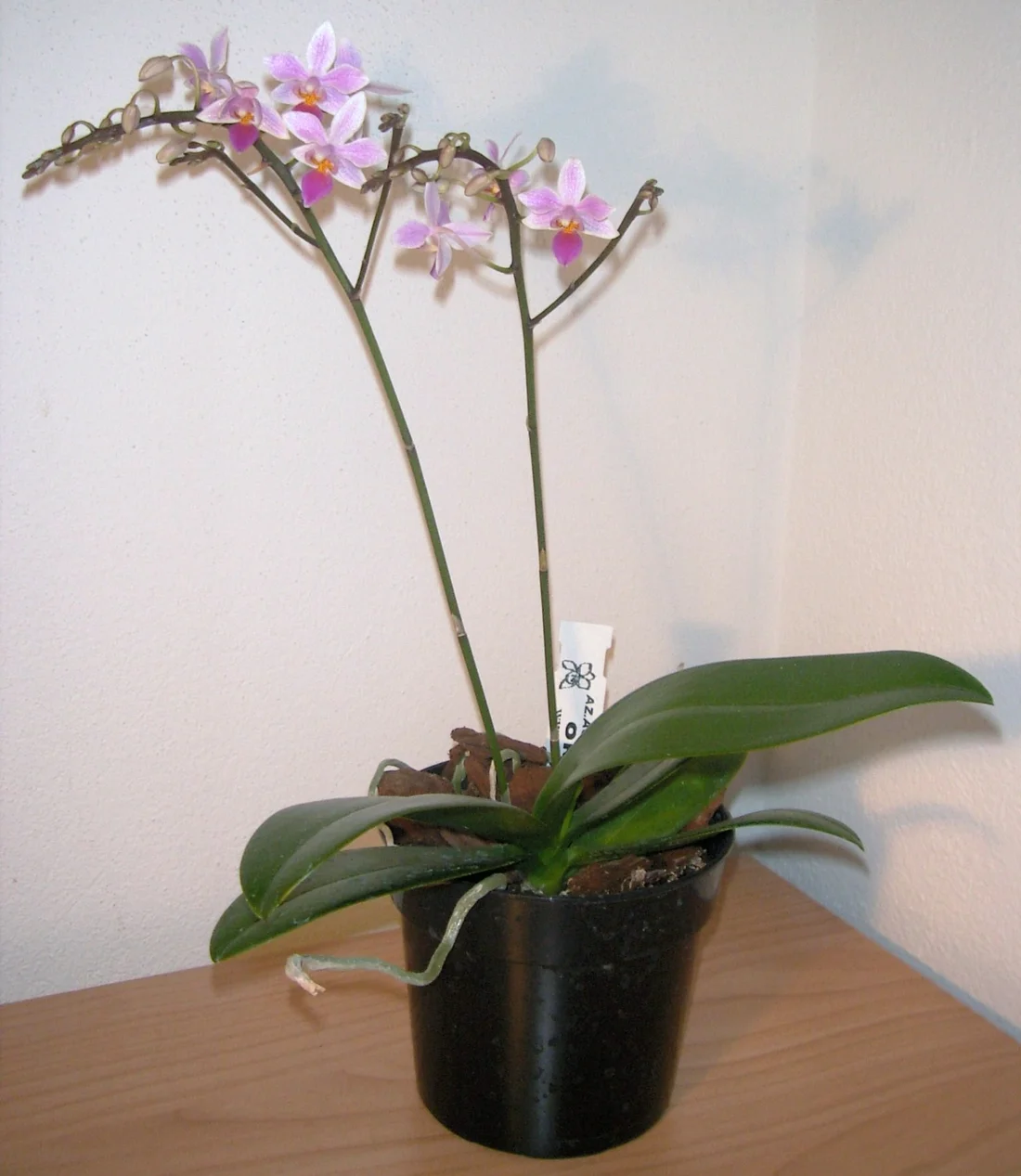
Photo:
Photo details
Phalaenopsis equestris in pot.JPG
By RobertoMM

License: Public domain

Resized and converted to WebP for display; botanical details unchanged.
Plant shopping
Explore this plant
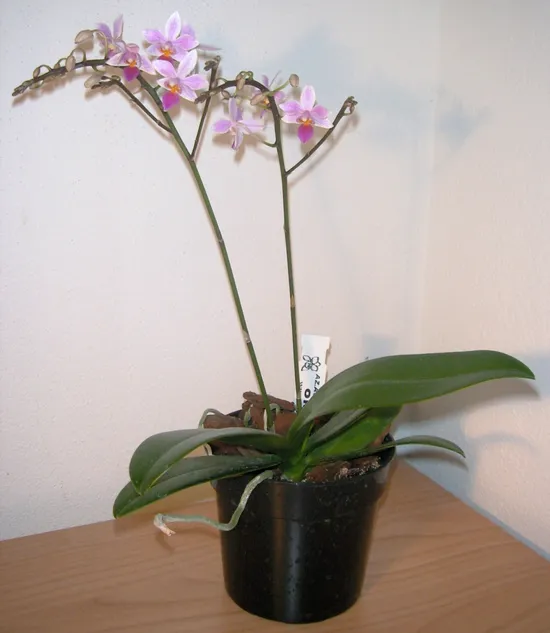
Photo:
Photo details
Phalaenopsis equestris in pot.JPG
By RobertoMM
License: Public domain
Resized and converted to WebP for display; botanical details unchanged.
Moth orchid
View on Amazon — moth orchid; paid link; opens in a new tabPaid link · Opens in a new tab
Non-toxic does not mean edible. Chewing plants can still upset your cat’s stomach.
A little paw-note: We may earn a commission when you buy through these links. This helps us keep building and helps Nico & Larry sustain their lavish kitty lifestyle.
As an Amazon Associate I earn from qualifying purchases.
Look for Phalaenopsis spp. and check the selected variety. Listings and availability can change.
Plant identity
- Scientific name
- Phalaenopsis spp.
- Scope
- Genus-level group
- Family
- Not recorded
- Also known as
- Moth Orchid, Phalaenopsis Orchid
Find the right spot
How to grow this plant
General guidance for commonly sold moth-orchid houseplants. Individual Phalaenopsis species and hybrids can differ.
- Light
- Bright indirect light
Place near a bright window with direct summer sun filtered by a curtain. A dim corner is unlikely to support good flowering.
- Watering
- Let the mix partly dry
Water thoroughly with tepid water in the morning, keep water out of the leaf crown, and drain fully. Allow the orchid mix to lose some moisture before watering again; avoid prolonged dryness and a wet standing pot.
- Temperature
- Daytime: 66–86°F / 19–30°C
Aim for nights around 16-19°C (61-66°F); avoid abrupt temperature changes.
- Humidity
- Higher humidity
A humid position helps; keep the plant away from drying heat vents.
- Potting
- Use an airy orchid mix, commonly based on bark, rather than dense general-purpose compost. A clear inner pot makes it easier to inspect the roots and allows light to reach them.
- Through the year
- Repot into fresh orchid mix when it breaks down, usually after flowering.
Growing-guide sources
- phalaenopsis - Extension Gardener Plant Toolbox ↗NC State Extension · Accessed 2026-11-01
Care guidance for the named taxon; indoor recommendations take precedence over outdoor hardiness information.
- How to grow moth orchids ↗Royal Horticultural Society · Accessed 2026-10-13
Applies to commonly grown indoor moth orchids, not every wild species.
Growing advice reviewed 2026-11-01. Plant safety is assessed separately.
Reviewed safety information
- Toxic principle
- Not recorded in the reviewed evidence
- Reported signs
- Not recorded in the reviewed evidence
Missing information is unknown. It should not be interpreted as an absence of risk.
Safe alternatives
No verified alternative recommendations are available for this guide.
Sources & review
- Phalaenopsis Orchid ↗ASPCA Animal Poison Control · Accessed
Listed by the source as Phalaenopsis sp.. ASPCA’s moth-orchid listing uses Phalaenopsis sp.; its pet-friendly houseplant guidance also discusses Phalaenopsis species and hybrids. This guide is limited to plants identified as Phalaenopsis and excludes intergeneric hybrids and other orchids.
- Liven Up Your Space With These Pet-Friendly Plants! ↗ASPCA Animal Poison Control · Accessed 2026-10-10
Safety last reviewed .