Plant guide
Poinsettia
Euphorbia pulcherrima
Poinsettia sap can irritate a cat's mouth and stomach and sometimes cause vomiting. It is toxic, but its danger is often exaggerated.
What this guide covers: This guide covers Euphorbia pulcherrima, including the pictured red-bracted plant.
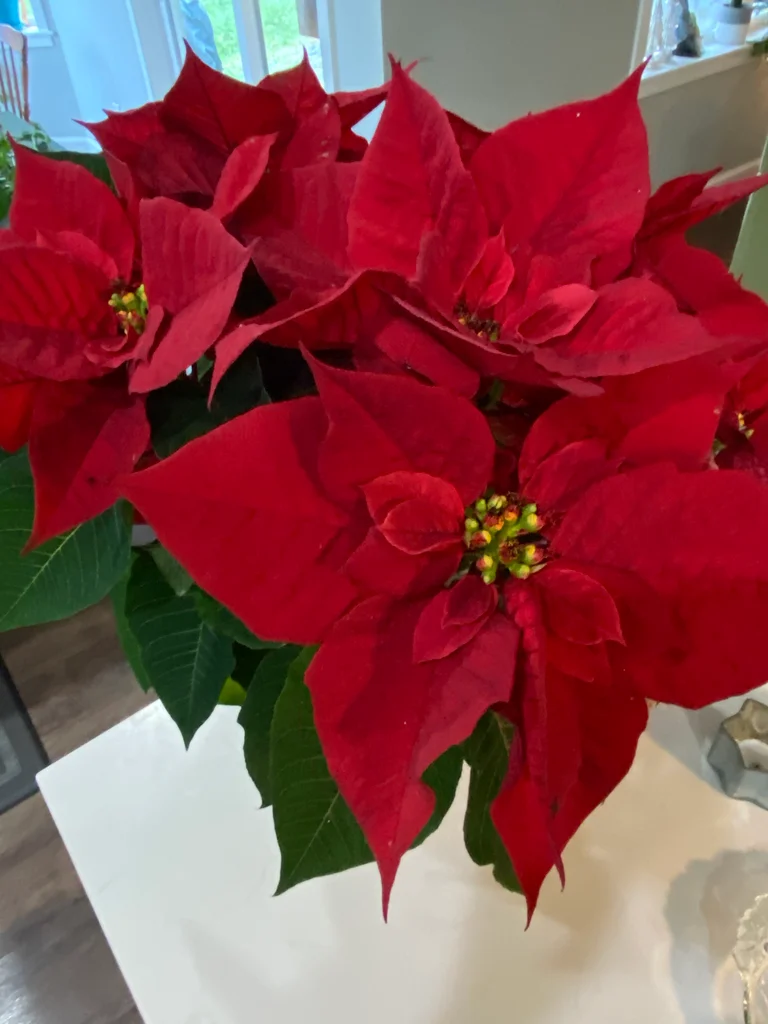
Photo:
Photo details
Euphorbia pulcherrima — NC State Extension image 28303
By Kathleen Moore
License: CC BY 2.0
Resized and converted to WebP for display; botanical details unchanged.
Plant identity
- Scientific name
- Euphorbia pulcherrima
- Scope
- Species
- Family
- Euphorbiaceae
- Also known as
- No reviewed aliases available
Find the right spot
How to grow this plant
This guide covers Euphorbia pulcherrima, including the pictured red-bracted plant.
- Light
- Some direct sun
Part shade; avoid harsh exposure.
- Watering
- Let the mix partly dry
Water when the soil surface feels dry, and allow excess water to drain.
- Temperature
- Temperature range not yet established
65-70 F; keep away from cold drafts, fireplaces and heat vents.
- Humidity
No specific humidity target established.
- Potting
- Use a well-drained potting mix.
- Through the year
- Plants can be kept after the colored bracts fade. Restoring holiday color requires carefully controlled light and darkness.
Growing-guide sources
- Euphorbia pulcherrima ↗NC State Extension · Accessed 2026-10-15
This guide covers Euphorbia pulcherrima, including the pictured red-bracted plant.
Growing advice reviewed 2026-10-15. Plant safety is assessed separately.
Reviewed safety information
- Toxic principle
- Not recorded in the reviewed evidence
- Reported signs
- Not recorded in the reviewed evidence
- Severity
- Severity not established
Missing information is unknown. It should not be interpreted as an absence of risk.
Safe alternatives
No verified alternative recommendations are available for this guide.