Plant guide
True Lily (Easter Lily)
Lilium longiflorum
Easter lily is highly toxic to cats. Swallowing any part of the plant, pollen or vase water can cause life-threatening kidney damage. If exposure is suspected, contact a veterinarian or animal poison-control service immediately; do not wait for symptoms.
What this guide covers: This guide covers Lilium longiflorum, the Easter lily explicitly named in FDA guidance about dangerous lilies and cats. The name lily is shared by different plants and does not establish that they have the same effects.
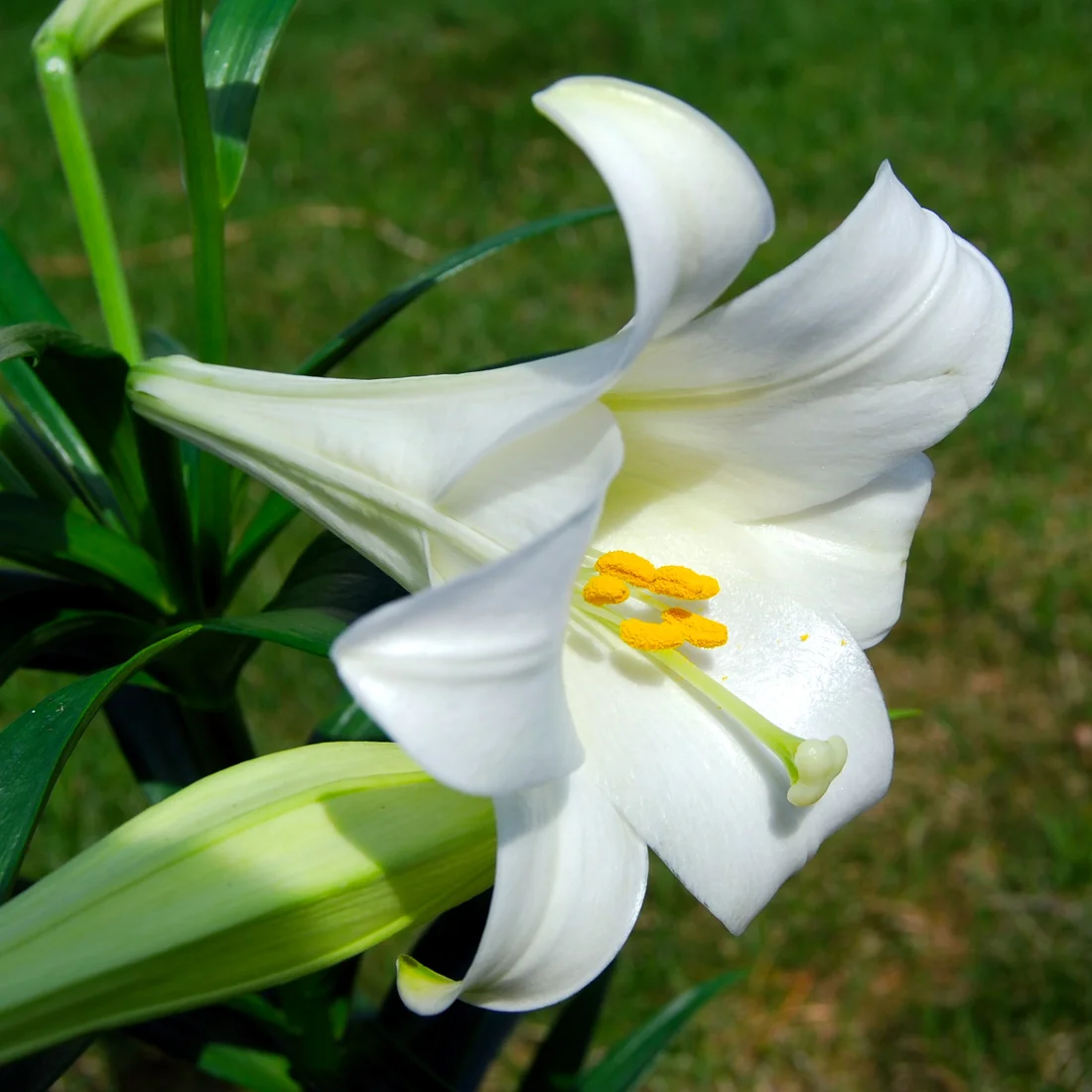
Photo:
Photo details
Lilium longiflorum (Easter Lily).JPG
By Matt H. Wade (UpstateNYer)

License: CC BY-SA 3.0
Source white-balance adjustment by IdLoveOne. Resized and converted to WebP for display; botanical details unchanged.
This displayed image is shared under the same CC BY-SA 3.0 license.
Plant identity
- Scientific name
- Lilium longiflorum
- Scope
- Species
- Family
- Not recorded
- Also known as
- No reviewed aliases available
Find the right spot
How to grow this plant
Care for a temporary florist Easter-lily display. This plant remains highly toxic to cats; these instructions are not a recommendation to bring it into a cat household.
- Light
- Bright indirect light
For a temporary indoor flower display, use bright light without intense direct sun.
- Watering
- Let the mix partly dry
Water when the surface of the mix dries, then drain fully; do not let the root ball stay dry for long.
- Temperature
- Seasonal display: 60–68°F / 16–20°C
Keep the display away from heat sources. This is a display range, not an outdoor hardiness rating.
- Potting
- Use a container that drains freely rather than trapping water inside a decorative cover.
- Through the year
- This is a seasonal flowering bulb, not an ordinary year-round foliage houseplant.
Growing-guide sources
- Mills County horticulture newsletter, April 2021 - Easter lilies ↗Iowa State University Extension and Outreach · Accessed 2026-10-13
The Easter-lily care article is used for growing conditions only, not its general pet-toxicity wording.
Growing advice reviewed 2026-10-14. Plant safety is assessed separately.
Reviewed safety information
- Toxic principle
- Not recorded in the reviewed evidence
- Reported signs
- Vomiting; Loss of appetite; Lethargy; Kidney failure
- Severity
- Potentially life-threatening
Missing information is unknown. It should not be interpreted as an absence of risk.
Safe alternatives
No verified alternative recommendations are available for this guide.
Sources & review
- Easter Lily ↗ASPCA Animal Poison Control · Accessed
- Lovely Lilies and Curious Cats: A Dangerous Combination ↗U.S. Food and Drug Administration · Accessed
Safety last reviewed .