Plant guide
Grape ivy
Cissus alata
Grape ivy is non-toxic to cats. Let it climb a support or trail from a securely placed basket, away from cats that treat dangling vines as toys.
Non-toxic does not mean edible. Eating plant material can still upset your cat’s stomach.
What this guide covers: Cissus alata only. Check the botanical name; a photo cannot establish the identity of your plant.
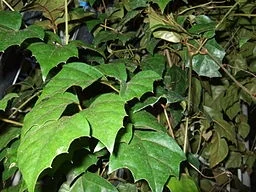
Photo:
Photo details
Cissus alata — Cissus rhombifolia
By Halava
License: CC BY-SA 4.0
Resized and converted to WebP for display; botanical details unchanged.
This displayed image is shared under the same CC BY-SA 4.0 license.
Plant identity
- Scientific name
- Cissus alata
- Scope
- Species
- Family
- Not recorded
- Also known as
- No reviewed aliases available
Find the right spot
How to grow this plant
Cissus alata only. Check the botanical name; a photo cannot establish the identity of your plant.
- Light
- Bright indirect light
Bright, indirect light; lower light is tolerated.
- Watering
Let the surface dry between waterings; reduce watering in winter.
- Temperature
- Temperature range not yet established
Keep above 50°F; no complete preferred range proposed.
- Humidity
Tolerates low indoor humidity.
- Potting
- Well-drained, peat-based potting mix.
- Through the year
- Prune to shape as needed and provide a trellis if growing upright.
Growing-guide sources
- Cissus alata ↗NC State Extension · Accessed 2026-10-16
Cissus alata only. Check the botanical name; a photo cannot establish the identity of your plant.
Growing advice reviewed 2026-10-17. Plant safety is assessed separately.
Reviewed safety information
- Toxic principle
- Not recorded in the reviewed evidence
- Reported signs
- Not recorded in the reviewed evidence
Missing information is unknown. It should not be interpreted as an absence of risk.
Safe alternatives
No verified alternative recommendations are available for this guide.
Sources & review
- Grape ivy: source assessment ↗ASPCA · Accessed
Listed by the source as Cissus rhombifolia. VPIS names Cissus alata and its older name Cissus rhombifolia. ASPCA uses the older name, also documented by NC State. This is not English ivy or a grape-fruit feeding recommendation.
- Cissus alata ↗NC State Extension · Accessed 2026-10-16
- Grape ivy: source assessment ↗ASPCA · Accessed 2026-10-16
Safety last reviewed .