Plant guide
Chinese Evergreen
Aglaonema commutatum
Chinese evergreen is considered toxic to cats. Chewing it can cause mouth pain, drooling or vomiting. Contact your veterinarian after a suspected exposure; difficulty swallowing or breathing needs urgent care. This guide covers Aglaonema commutatum.
What this guide covers: This guide covers Aglaonema commutatum using the assessed Aglaonema genus and documented species membership. It does not equate this species with Aglaonema modestum or unidentified hybrids.
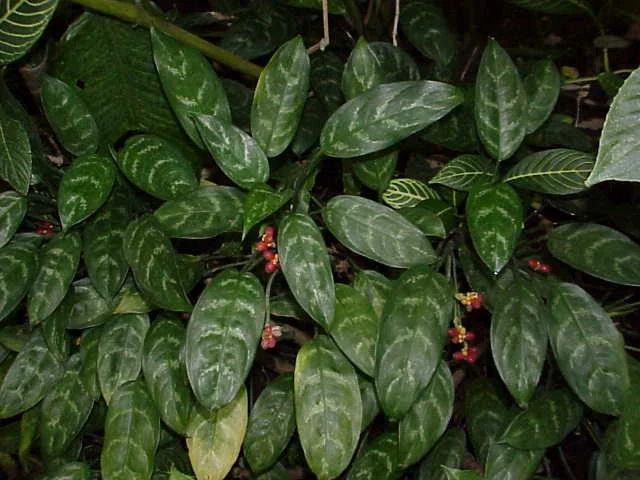
Photo:
Photo details
Aglaonema commutatum2.jpg
By Kurt Stüber [1]

License: CC BY-SA 3.0
Resized and converted to WebP for display; botanical details unchanged.
This displayed image is shared under the same CC BY-SA 3.0 license.
Plant identity
- Scientific name
- Aglaonema commutatum
- Scope
- Species
- Family
- Araceae
- Also known as
- No reviewed aliases available
Find the right spot
How to grow this plant
Container growing guidance for Aglaonema commutatum.
- Light
- Medium indirect light
Choose low to moderate indirect light, with protection from direct sun.
Tolerates lower light; growth or flowering may be reduced. - Watering
- Let the mix partly dry
Water when the upper one to two inches of mix are dry; let excess drain.
- Temperature
- Growing range: 68–80°F / 20–27°C
Avoid chilling below 55°F (13°C); that limit is not the preferred growing range.
- Humidity
- Typical indoor humidity
Typical household humidity is suitable.
- Potting
- Use a well-drained, organic potting mix.
- Through the year
- Keep away from drafts and cold windows.
Growing-guide sources
- Chinese Evergreen (Aglaonema): Care, Cultivation & Growing Guide ↗Clemson Cooperative Extension · Accessed 2026-10-13
Genus-level Chinese-evergreen guidance explicitly discussing A. commutatum. Cultivar light preferences can differ.
Growing advice reviewed 2026-10-14. Plant safety is assessed separately.
Reviewed safety information
- Toxic principle
- Insoluble calcium oxalates
- Reported signs
- Mouth pain; Drooling; Vomiting; Difficulty swallowing; Difficulty breathing
- Severity
- Severity not established
Missing information is unknown. It should not be interpreted as an absence of risk.
Safe alternatives
No verified alternative recommendations are available for this guide.
Sources & review
- Houseplant oxalate guidance ↗ASPCA Poison Control · Accessed
Listed by the source as Aglaonema spp.. The poison-control source assesses Aglaonema spp.. Kew documents Aglaonema commutatum as a member of that genus. This applies that group assessment only to the named species, not to unrelated plants or unidentified hybrids.
- Houseplant oxalate guidance ↗ASPCA Poison Control · Accessed 2026-10-12
- Aglaonema commutatum taxonomy ↗Royal Botanic Gardens, Kew · Accessed 2026-10-12
Safety last reviewed .