Plant guide
Bromeliad
Guzmania lingulata
Scarlet star (Guzmania lingulata) is considered non-toxic to cats. This assessment applies to that species, rather than every plant sold as a bromeliad.
Non-toxic does not mean edible. Eating plant material can still upset your cat’s stomach.
What this guide covers: This guide covers Guzmania lingulata (scarlet star), not the entire bromeliad family or unidentified bromeliad hybrids.
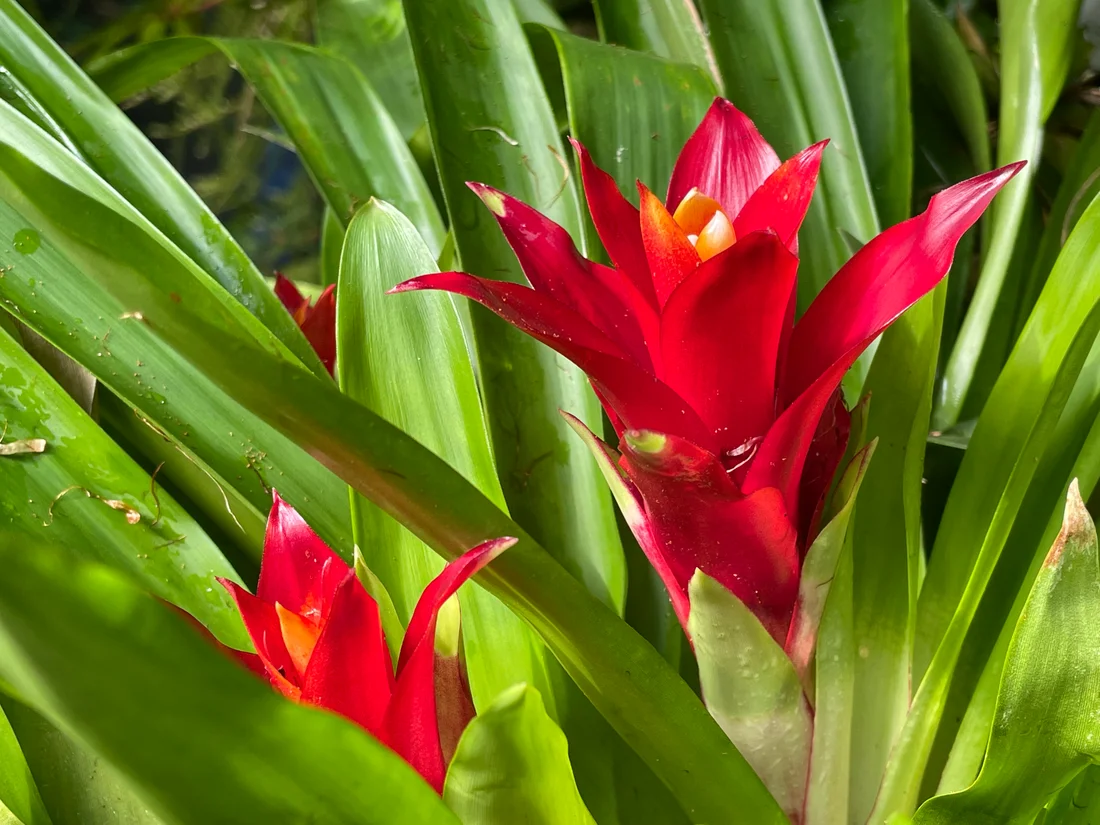
Photo:
Photo details
Guzmania lingulata 5730.jpg
By Amada44

License: CC BY-SA 3.0
Resized and converted to WebP for display; botanical details unchanged.
This displayed image is shared under the same CC BY-SA 3.0 license.
Plant identity
- Scientific name
- Guzmania lingulata
- Scope
- Species
- Family
- Bromeliaceae
- Also known as
- No reviewed aliases available
Find the right spot
How to grow this plant
Container growing guidance for Guzmania lingulata.
- Light
- Bright indirect light
Use bright, filtered light rather than strong direct sun.
- Watering
- Special watering method
Water the roots sparingly. The central leaf cup can hold water during summer; root-zone watering is reduced in winter.
- Temperature
- Temperature range not yet established
A normal indoor growing range has not been established in this review.
- Humidity
- Higher humidity
Provide humid air.
- Potting
- Use an airy mix intended for epiphytic bromeliads.
- Through the year
- Keep the mix barely moist in winter. The flowering rosette eventually dies as offsets develop.
Growing-guide sources
- guzmania lingulata - Extension Gardener Plant Toolbox ↗NC State Extension · Accessed 2026-10-13
Care guidance for the named taxon; indoor recommendations take precedence over outdoor hardiness information.
- Guzmania lingulata ↗Royal Horticultural Society · Accessed 2026-10-13
Species care; the propagation temperature on this page is not used as a normal growing range.
Growing advice reviewed 2026-10-14. Plant safety is assessed separately.
Reviewed safety information
- Toxic principle
- Not recorded in the reviewed evidence
- Reported signs
- Not recorded in the reviewed evidence
Missing information is unknown. It should not be interpreted as an absence of risk.
Safe alternatives
No verified alternative recommendations are available for this guide.
Sources & review
- Pet ‘safe’ plants — Version 1, August 2023 ↗Veterinary Poisons Information Service · Accessed
Safety last reviewed .