Plant guide
Bird of Paradise
Strelitzia reginae
Bird of paradise has published toxicity warnings for cats, with particular concern around its fruit and seeds. Another veterinary reference includes it among plants suitable for households with pets. Because those assessments differ, we do not recommend it as a cat-safe purchase or assume that its leaves are safe to chew.
What this guide covers: This page concerns Strelitzia reginae, not Strelitzia nicolai or the unrelated Caesalpinia plants also sold under the name bird of paradise.
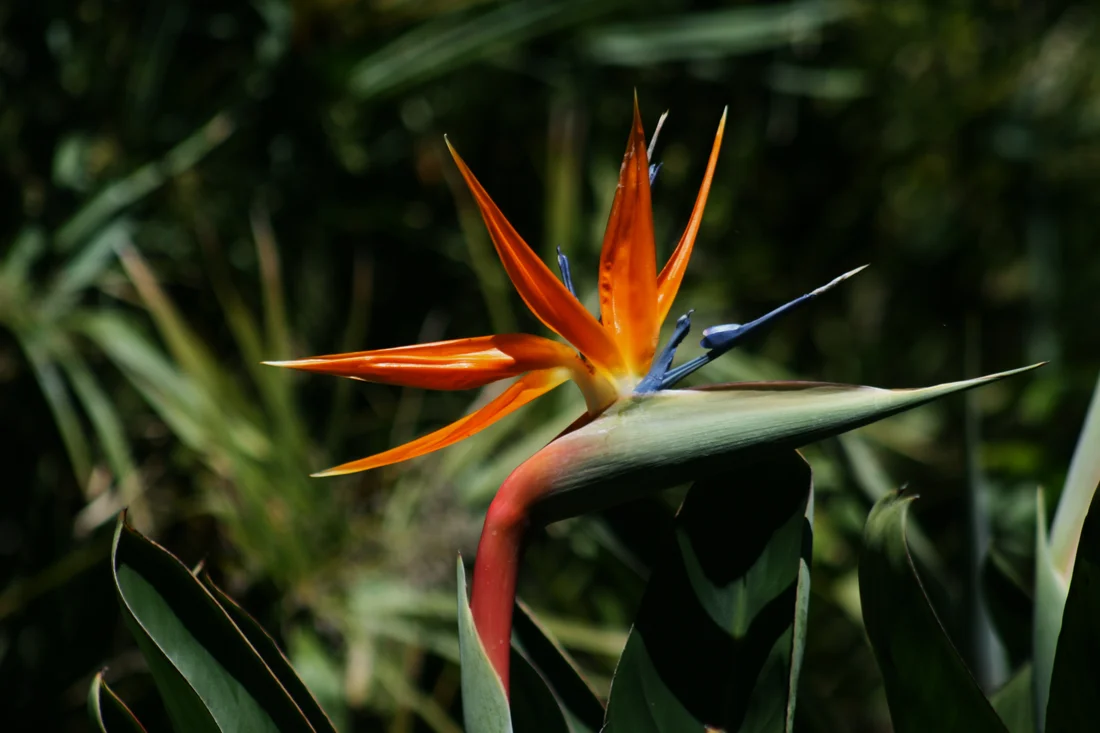
Photo:
Photo details
Bird of Paradise flower.JPG
By Brocken Inaglory

License: CC BY-SA 3.0
Resized for display. Full photograph retained; no background or botanical edits.
This displayed image is shared under the same CC BY-SA 3.0 license.
Plant shopping
Explore this plant
Photo:
Photo details
Bird of Paradise flower.JPG
By Brocken Inaglory
License: CC BY-SA 3.0
Resized for display. Full photograph retained; no background or botanical edits.
This displayed image is shared under the same CC BY-SA 3.0 license.
Orange bird of paradise
View on Amazon — orange bird of paradise; paid link; opens in a new tabPaid link · Opens in a new tab
Cat safety is unresolved. This purchase link is not a cat-safe recommendation. Prevent your cat from accessing this plant.
Read the evidence in this guide ↓Explore non-toxic plants →A little paw-note: We may earn a commission when you buy through these links. This helps us keep building and helps Nico & Larry sustain their lavish kitty lifestyle.
As an Amazon Associate I earn from qualifying purchases.
Look for Strelitzia reginae and check the selected variety. Listings and availability can change.
Plant identity
- Scientific name
- Strelitzia reginae
- Scope
- Species
- Family
- Strelitziaceae
- Also known as
- No reviewed aliases available
Our practical recommendation
Your cat comes first.
Choose another plant for a cat-accessible display. Prevent chewing or ingestion, and do not treat the fruit-and-seed warnings as proof that the leaves are safe.
Explore reviewed non-toxic plants ↗Why the guidance differs
ASPCA and LSU Veterinary Medicine identify Strelitzia reginae as toxic to cats and associate reported illness mainly with fruit and seeds. VPIS includes it on a household pet-safe list. Household suitability and ingestion hazards may be framed differently, but we cannot confirm that this explains the disagreement. The fruit-and-seed emphasis does not establish leaf safety.
A disagreement between references does not cancel a toxicity warning. We keep those warnings visible while the assessment remains unresolved.
Sources & review
Exact species; cat warning, mainly fruit/seeds.
Source scope and date
ASPCA · Source name: Strelitzia reginae. Exact species, cat warning. Fruit/seed emphasis does not establish leaf safety.
Accessed .
Exact species; cat warning, mainly fruit/seeds.
Source scope and date
LSU Veterinary Medicine · Source name: Strelitzia reginae. Exact species, cat warning; similar wording to ASPCA is not evidence of an independent experiment.
Accessed .
Exact species; household suitability with general ingestion caveat.
Source scope and date
VPIS · Source name: Strelitzia reginae. Page 2, household pet-safe list with a general ingestion caveat.
Accessed .
Evidence checked . The cat-safety classification remains unresolved.
Find the right spot
How to grow this plant
Container growing guidance for Strelitzia reginae.
- Light
- Sunny position
Choose a sunny indoor position.
- Watering
- Keep evenly moist
Supply water during active spring and summer growth, allowing good drainage. Reduce watering in winter.
- Temperature
- Temperature range not yet established
The source gives night temperatures of 55-65°F (13-18°C), but no complete daytime range. It will not match a daytime room-temperature filter.
- Potting
- Use a rich, loamy, well-drained mix.
- Through the year
- Water less in winter as growth slows.
Growing-guide sources
- strelitzia reginae - Extension Gardener Plant Toolbox ↗NC State Extension · Accessed 2026-10-13
Care guidance for the named taxon; indoor recommendations take precedence over outdoor hardiness information.
Growing advice reviewed 2026-10-14. Plant safety is assessed separately.
Safe alternatives
No verified alternative recommendations are available for this guide.