Plant guide
Peruvian lily
Alstroemeria spp.
Peruvian lilies can cause stomach upset when eaten. Published guidance differs on whether to call them non-toxic or mildly toxic, so we do not recommend them as cat-safe plants.
What this guide covers: Alstroemeria species and garden cultivars only. These are different from true lilies and daylilies; an unidentified lily exposure needs prompt veterinary advice.
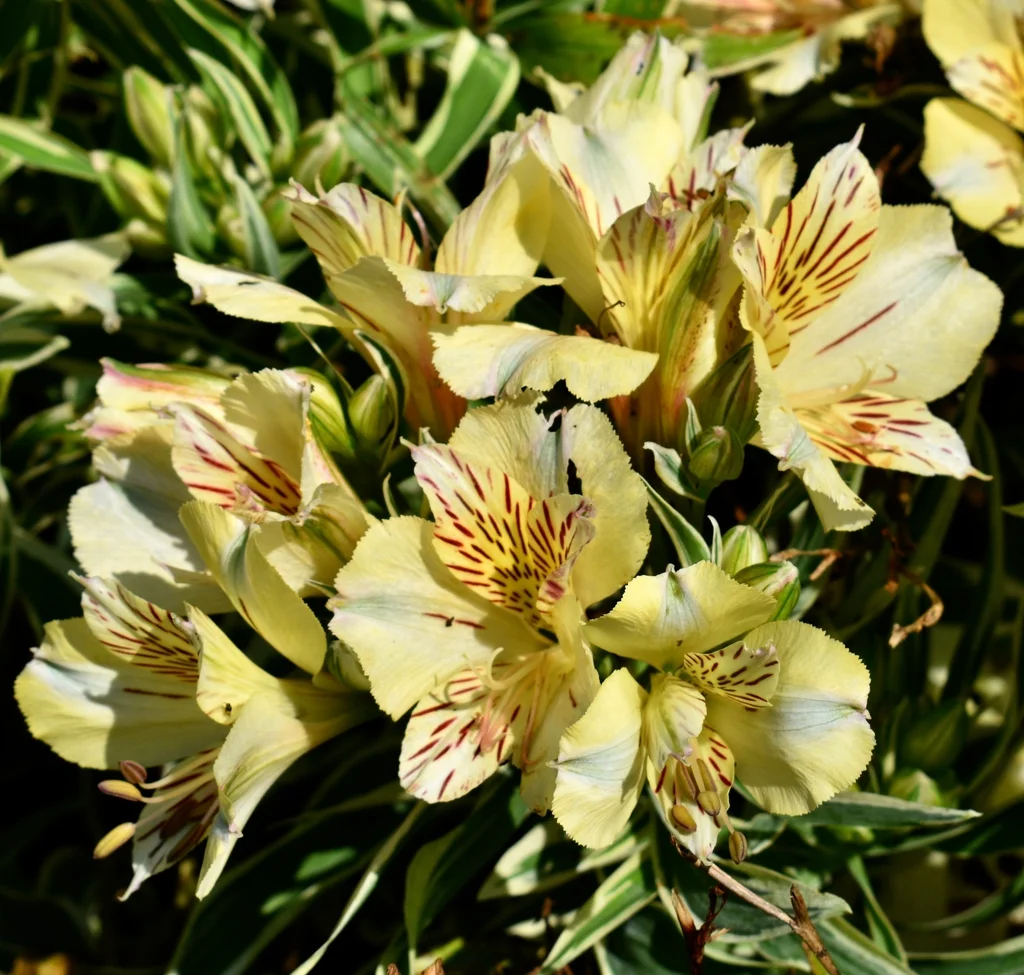
Photo:
Photo details
Alstroemeria spp. — 'Princess Fabiana' - Flowers, Buds & Leaves- Aug. 11 - Wake Co., NC
By Cathy DeWitt
License: CC BY 4.0
Resized and converted to WebP for display; botanical details unchanged.
Plant identity
- Scientific name
- Alstroemeria spp.
- Scope
- Genus-level group
- Family
- Not recorded
- Also known as
- No reviewed aliases available
Our practical recommendation
Your cat comes first.
Prevent chewing and do not choose Peruvian lily as a cat-safe alternative. An unidentified lily exposure needs prompt veterinary advice.
Explore reviewed non-toxic plants ↗Why the guidance differs
ASPCA labels Alstroemeria non-toxic; Pet Poison Helpline describes tulipalin A and gastrointestinal effects after larger ingestions.
A disagreement between references does not cancel a toxicity warning. We keep those warnings visible while the assessment remains unresolved.
Sources & review
The genus-level listing labels Peruvian lily non-toxic to cats.
Source scope and date
ASPCA · Source name: Alstroemeria. Alstroemeria species and garden cultivars only. These are different from true lilies and daylilies; an unidentified lily exposure needs prompt veterinary advice.
Accessed .
Describes tulipalin A and gastrointestinal effects after larger ingestions.
Source scope and date
Pet Poison Helpline · Source name: Alstroemeria spp.. Alstroemeria species and garden cultivars only. These are different from true lilies and daylilies; an unidentified lily exposure needs prompt veterinary advice.
Accessed .
Evidence checked . The cat-safety classification remains unresolved.
Find the right spot
How to grow this plant
Alstroemeria species and garden cultivars only. These are different from true lilies and daylilies; an unidentified lily exposure needs prompt veterinary advice.
- Light
- Sunny position or Some direct sun
Sun to partial shade; select a position suited to the cultivar.
- Watering
- Keep evenly moist
Maintain moisture with drainage; both too much and too little water can cause problems.
- Temperature
- Temperature range not yet established
Cold protection depends on cultivar and climate; no universal range established.
- Humidity
No specific humidity target established.
- Potting
- Well-drained, organically rich soil.
- Through the year
- Handle brittle roots carefully. Tender selections can be brought under cover for winter.
Growing-guide sources
- Alstroemeria spp. ↗NC State Extension · Accessed 2026-10-16
Alstroemeria species and garden cultivars only. These are different from true lilies and daylilies; an unidentified lily exposure needs prompt veterinary advice.
Growing advice reviewed 2026-10-16. Plant safety is assessed separately.
Safe alternatives
No verified alternative recommendations are available for this guide.