Plant guide
Desert rose
Adenium obesum
Desert rose is toxic to cats. Ingestion can affect the heart. Contact a veterinarian immediately if your cat may have eaten any of it; do not wait for symptoms.
What this guide covers: Adenium obesum only. Confirm the botanical label; a photograph cannot identify a visitor’s specimen.
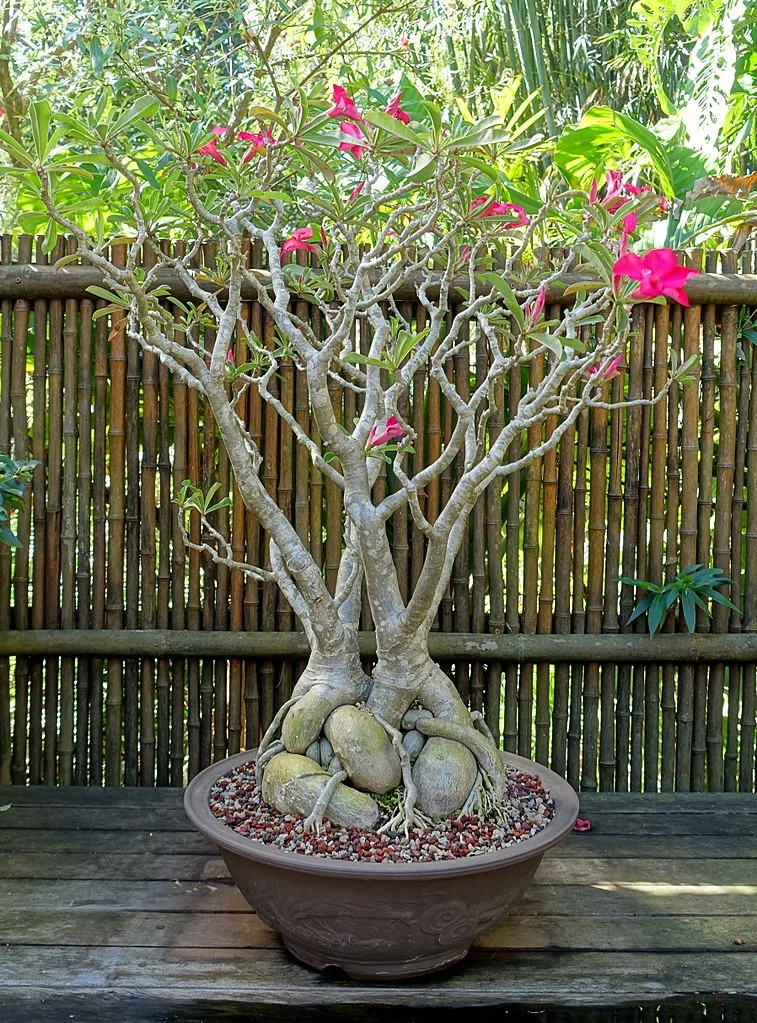
Photo:
Photo details
NC State Extension — Adenium obesum
By Daderot
License: CC0
Original photograph unchanged; proportionally resized for review and display.
Plant shopping
Explore this plant
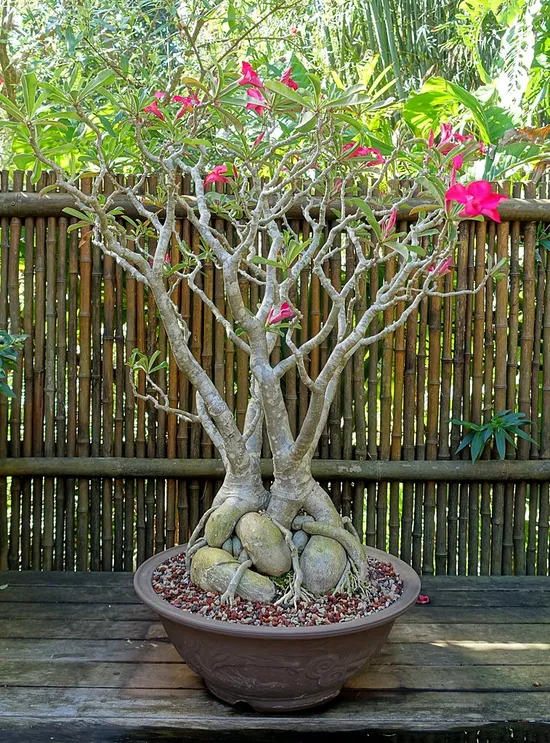
Photo:
Photo details
NC State Extension — Adenium obesum
By Daderot
License: CC0
Original photograph unchanged; proportionally resized for review and display.
Desert rose starter plant
View on Amazon — desert rose starter plant; paid link; opens in a new tabPaid link · Opens in a new tab
Keep away from cats. We do not recommend this plant for a home where cats could reach it.
Explore non-toxic plants →A little paw-note: We may earn a commission when you buy through these links. This helps us keep building and helps Nico & Larry sustain their lavish kitty lifestyle.
As an Amazon Associate I earn from qualifying purchases.
Look for Adenium obesum and check the selected variety. Listings and availability can change.
Plant identity
- Scientific name
- Adenium obesum
- Scope
- Species
- Family
- Not recorded
- Also known as
- No reviewed aliases available
Find the right spot
How to grow this plant
Adenium obesum only; the light and water categories summarize the cited growing guidance.
- Light
- Sunny position
Provide full sun.
- Watering
- Let the mix dry
Let the mix dry between waterings; use less water during dormancy.
- Temperature
- Temperature range not yet established
Bring it indoors as outdoor temperatures reach 55°F; this is a cold-protection trigger, not a full growing range.
- Potting
- Use a cactus or succulent mix and a pot with drainage holes.
- Through the year
- Spring feeding can support flowering; reduce watering while dormant.
Growing-guide sources
- Adenium obesum - Extension Gardener Plant Toolbox ↗NC State Extension · Accessed 2026-10-17
Exact named species; garden conditions are not relabeled as indoor requirements.
Growing advice reviewed 2026-10-17. Plant safety is assessed separately.
Reviewed safety information
- Toxic principle
- Not recorded in the reviewed evidence
- Reported signs
- Not recorded in the reviewed evidence
- Severity
- Severity not established
Missing information is unknown. It should not be interpreted as an absence of risk.
Safe alternatives
No verified alternative recommendations are available for this guide.
Sources & review
- Desert rose: plant safety reference ↗ASPCA Poison Control · Accessed
ASPCA explicitly identifies A. obesum as toxic to cats and names cardiac glycosides. This guide advises urgent veterinary help for suspected exposure; the reviewed evidence does not establish a severity tier.
- Desert rose: supporting reference ↗NC State Extension · Accessed 2026-10-17
Safety last reviewed .